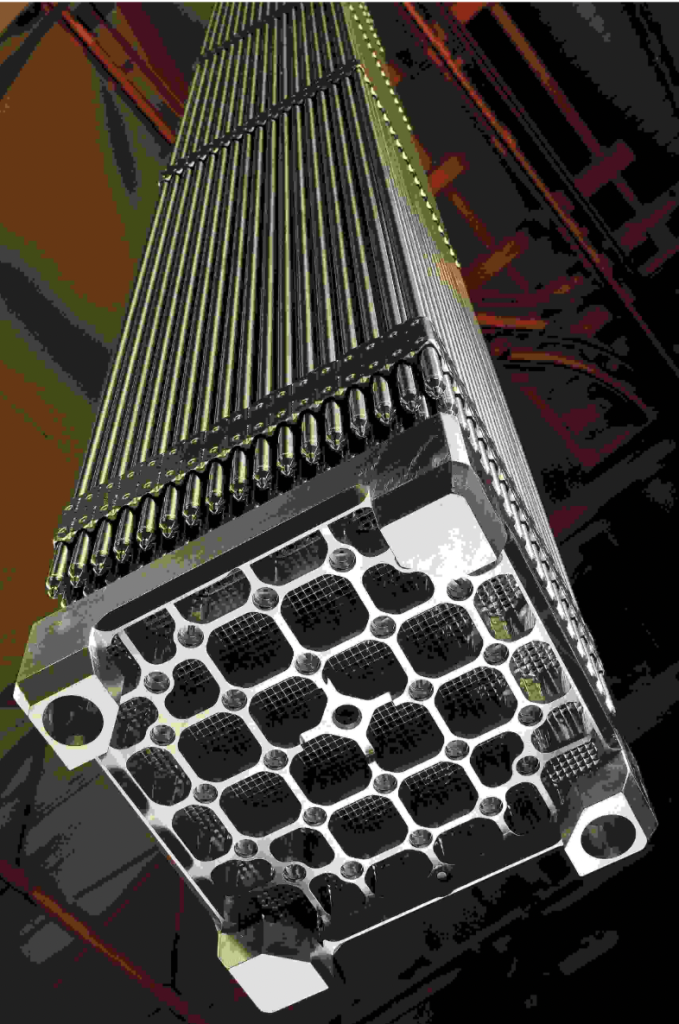
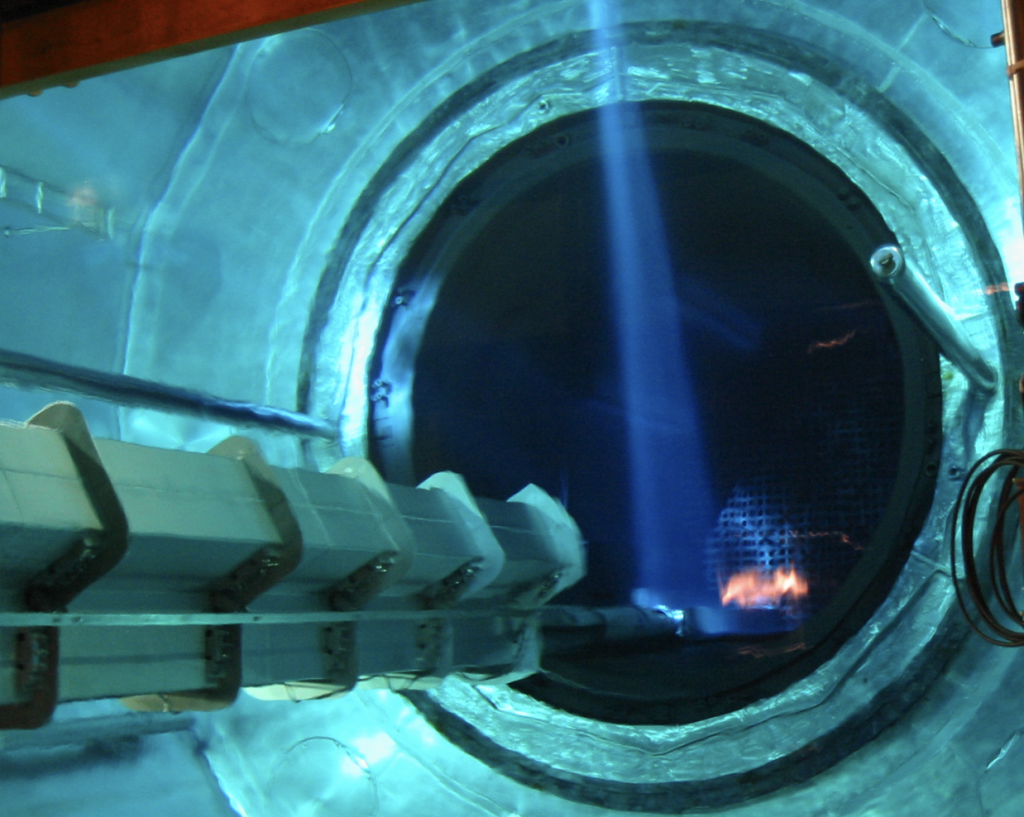
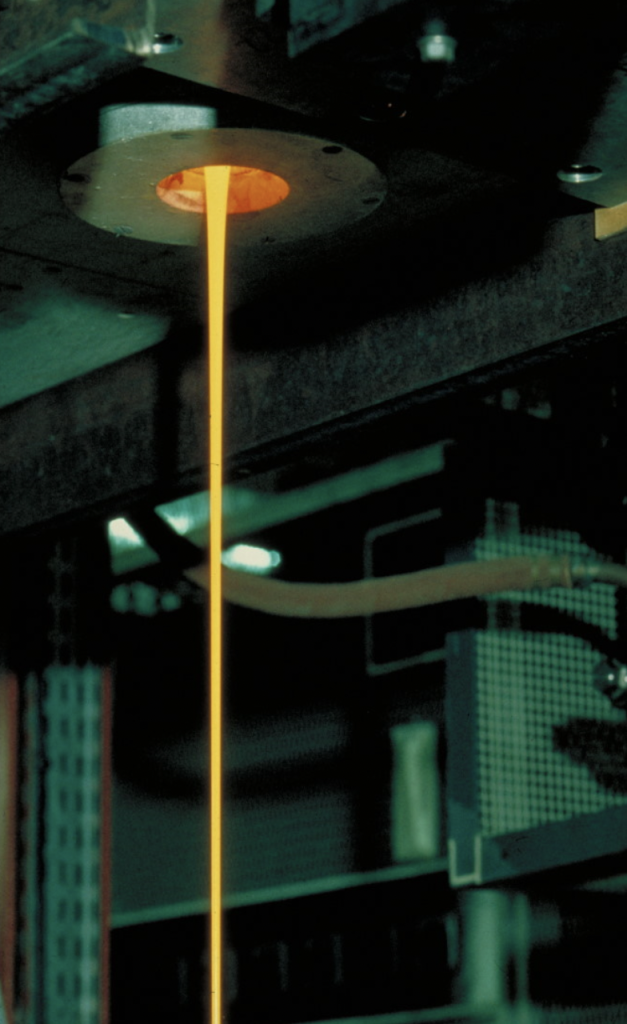
The electricity supplied by nuclear power plants is produced by the steam generated by the heat released after the fission of uranium 235 used as nuclear fuel. Before being loaded into the reactor, uranium goes through several processes known as the “nuclear fuel cycle”.
In France, the irradiated fuel is reprocessed and partially recycled before reuse.
The successive steps of the nuclear fuel cycle could be described as follows:
irst of all, the uranium ore, which generally contains 0.10% of uranium, is extracted.
The rocks are then crushed and finely ground into a thin powder.
.
After several chemical operations, the uranium is concentrated into a powder containing uranates, called “yellow cake”.
The yellow cake is then purified and converted by AREVA NC, first into uranium tetrafluoride (UF4) at Malvési, near Narbonne, and further into uranium hexafluoride (UF6) at the Pierrelatte site.
Natural uranium consists mainly of 2 radioactive isotopes in the following proportions: 99.3% ²³⁸U and 0.70% ²³⁵U. The enrichment process is meant to increase the ²³⁵U content up to between 3 and 5%, the necessary level for operating pressurised water reactors (PWR).
Enrichment is now performed by centrifugation.
In France, this process is used by SET, an AREVA subsidiary, at the Georges Besse II plant, on the Pierrelatte site.